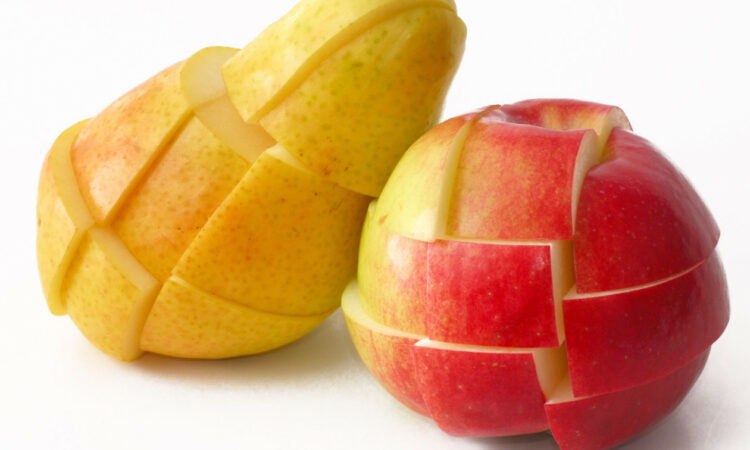



Apples and pears are both nutritious fruits and can be part of a healthy diet for people with diabetes. But which one has the least impact on blood sugar? According to nutritional data, pears contain slightly more fiber, while apples have a slightly lower amount of carbohydrates for the same weight.
However, there is not enough evidence to say that one of these two fruits consistently provides better glucose control than the other. The amount consumed, the size of the fruit, and how the body reacts to the food are of particular importance. In 100 grams of fresh fruit with skin, apples contain about 13,8 grams of carbohydrates and 2,4 grams of fiber. Pears, on the other hand, provide about 15,2 grams of carbohydrates and 3,1 grams of fiber.
This means that pears have a slight advantage in terms of fiber, while apples contain fewer carbohydrates for the same weight. Both are also a source of water and polyphenols, plant compounds that are associated with various health benefits. It should be noted that a whole apple or pear can weigh significantly more than 100 grams, so the total amount of carbohydrates also depends on the size of the fruit.
Which fruit raises blood sugar the least?
Both fruits have a low glycemic index, meaning that their carbohydrates are usually absorbed more slowly than those in foods with a high glycemic index. Published estimates often place the glycemic index of pears at around 30, while that of apples is around 40. However, these figures can vary depending on the variety and ripeness of the fruit. The difference does not mean that pears necessarily cause a smaller increase in blood sugar in any person. Both contain soluble fiber, including pectin, which helps slow digestion. However, the amount of carbohydrates consumed and the foods with which the fruit is paired also have an important impact.
A large observational study, published in the scientific journal BMJ, found an association between higher consumption of several fruits, including apples and pears, and a lower risk of type 2 diabetes. The study did not determine which of these fruits had the greatest impact and did not prove that consuming them prevents the disease.
How to consume them if you have diabetes?
People with diabetes can include both apples and pears in a balanced diet. A good choice is to consume the whole fruit, preferably with the skin, as this provides more fiber.
A small serving of fruit usually contains about 15 grams of carbohydrates, but a large apple or pear can significantly exceed this amount. For this reason, it is important to consider the size of the fruit and the total amount of carbohydrates during the day. If you notice that your blood sugar rises after consuming fruit, you can try a smaller portion or accompany the fruit with yogurt without added sugar or with a small handful of nuts. The protein and fat contained in these foods can affect the slowing of digestion, but the reaction varies from person to person.
Whole fruits are generally preferred over juices, as the latter contain less fiber and can provide a significant amount of carbohydrates in a short amount of time. Canned apples and pears can also be part of the diet, but it is important to choose products without added sugar, preserved in water or in their natural juice. Fruits in syrup can contain more sugar, so check the nutrition label and portion size.
If your meter shows a spike in blood sugar after eating a pear or apple, it doesn't mean you should automatically avoid the fruit. Portion size, ripeness of the fruit, and blood sugar levels before eating can all affect the result. If spikes are repeated or unexpected, it's a good idea to see your doctor. In conclusion, pears contain slightly more fiber, while apples have slightly fewer carbohydrates for the same weight. For blood sugar control, eating whole fruits in appropriate portions and as part of a balanced diet is more important than choosing between them.